Lake Forest Lots: Estates, Ravines and Old Oak Woods
Lake Forest runs from the Lake Michigan bluff all the way west past Waukegan Road, and the trees change as you go. On the east side, along Sheridan Road and around Deerpath, ravines cut through the properties and the canopy is mostly old oak with sugar maple, basswood and elm mixed in. Lots are deep. A single property can have more big trees than a whole block somewhere else.
West of Route 41 the land flattens out. Yards are more open, with spruce and pine screens along the lot lines, maples near the house, and leftover oak groves and wet woods out around Middlefork Savanna. Dead ash still stands along plenty of back lot lines, the same as everywhere else in the county.
Big trees on big lots sounds easy. It isn't always. The oak is over the roof, the ravine edge is right behind it, and the only way in is a long drive lined with more trees.
Pruning Oaks and Elms in Lake Forest the Right Way
If your property has oaks, the calendar comes first. Oaks shouldn't be pruned during the growing season, which runs roughly from spring through early fall. Fresh wounds pull in the beetles that spread oak wilt. In a town with this many old oaks, that's not a risk worth taking. Schedule oak work for winter. Elms get the same treatment.
Winter is also when most other trees are best trimmed. With the leaves down you can see crossing limbs, deadwood and weak forks. Typical trimming and pruning jobs here are deadwood out of mature oaks, limbs lifted off roofs and drives, and sight lines opened up without wrecking the shape of the tree.
For a canopy that's gotten too dense or hangs too low over a lawn or driveway, crown thinning and raising lets light and air through and keeps the tree looking like itself. The crew doesn't flat-cut tree tops, ever.
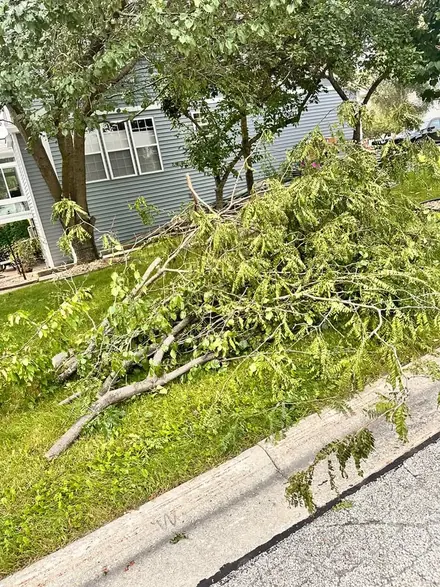
Storm-broken limbs don't wait for winter. If a branch is cracked or hanging, it comes off now, whatever the species.
Large Tree Removal in Lake Forest
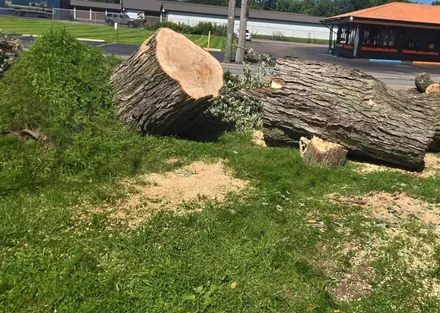
Nobody in Lake Forest takes down a big oak lightly, and you shouldn't. But trees die, split, hollow out and lean. When one has to go, removing a large tree near a house is slow, careful work. It comes apart from the top in sections. Heavy wood is lowered, not dropped. On a ravine lot, every piece also has to be brought back up to level ground.
Those jobs always get a free visit before a price. Someone needs to walk around the trunk, look at what's beneath the crown, and see how brush and logs will get out to the street.
Ash is its own case. Emerald ash borer has killed most untreated ash in northern Illinois, and dead ash turns brittle quickly. A brittle tree is harder to take down and more likely to drop limbs on its own. If there are dead ash along your drive, your fence or the edge of your woods, ash removal shouldn't sit on the list for another year.
Emergency Tree Service After a Lake Forest Storm
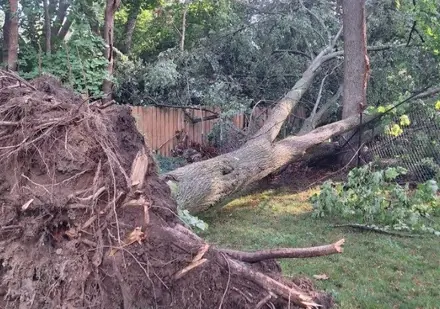
Big old crowns catch a lot of wind. If a tree or a heavy limb comes down on the house, a car, or across the driveway, call (224) 944-8652. For anything like that, use the phone and skip the text. Storm calls get handled as fast as the crew can reach you.
On a long private drive, one fallen tree can shut you in. With a fallen tree across the driveway, the first cuts open a lane so cars can get through. The rest of the cleanup follows.
If wires are involved, keep clear and call ComEd. Trees touching power lines are the utility's job first, and the crew won't work in the lines.
Stump Grinding After the Tree Is Down
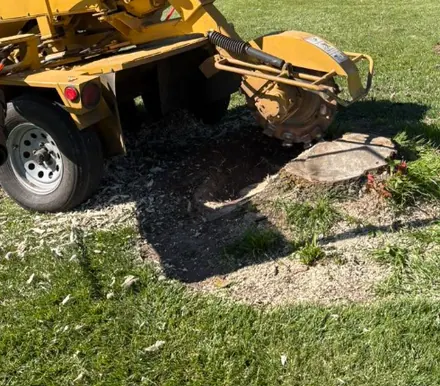
After a removal you've got a choice about the stump. Most people have it ground. Stump grinding chews it down below the surface so the spot can be seeded, or planted over by your landscaper. The grindings can stay as mulch or leave with the crew.
JULIE has to mark underground utilities first. It's a free call to 811. Sprinkler lines, pet fences and landscape lighting wire aren't marked by JULIE, so point those out yourself.
On a ravine slope, think before grinding. Some owners keep the stump cut low and leave the roots in place to hold the bank. Just say which you want.
Tree Permits: Ask the City First
Lake County towns take their trees seriously, and many have rules to match. Some require a permit before a tree is removed, even on private land. Your city may be one, so call city hall before the work is scheduled.
The crew can't get that answer for you and won't guess at it. Rules differ from town to town and they change. What you'll get from Lakefront Tree Service is a clear written description of the tree and the work, so you know exactly what you're asking about.
What a Lake Forest Tree Job Costs and Why
Text a photo and your town to (224) 944-8652. Trimming, single limbs, small removals and stumps can usually be quoted from pictures. Big removals get looked at in person, free.
You get one flat price in writing, agreed before any cutting starts. The number comes from the tree's size, where it stands, what shape it's in, how equipment gets to it, and whether the stump is included. A dead oak over a roof at the edge of a ravine is a very different job from the same size tree in the middle of an open lawn.
The page on how pricing works goes through those factors one at a time. No prices are published, because they'd be wrong for your tree.
Cleanup, Wood and Long Driveways
The job isn't done when the tree's on the ground. Brush is chipped, logs are hauled, and the lawn, beds and drive are raked and cleared. Illinois keeps yard waste out of landfills, so all of it is recycled.
Got a fireplace or a fire pit? Ask for the wood. It'll be left cut wherever you say. If you only want the oak and not everything else, say that too.
Lakefront Tree Service is insured for tree work and based a short drive west in Libertyville. The same crew handles tree work in Lake Bluff just north of you.
Tree Service in Lake Forest: What's Included
- The crew is insured for tree work
- One flat price in writing, agreed before any cutting
- Free quotes from a photo, and a free visit for big removals
- Cleanup included: brush chipped, wood hauled, yard raked
- We don't top trees