What Stump Grinding in Libertyville Leaves You With
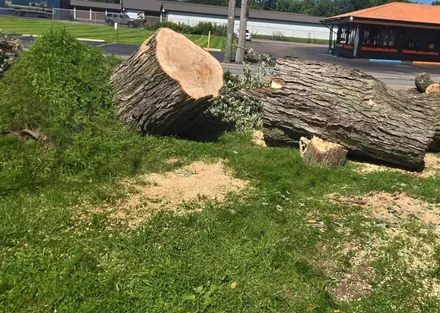
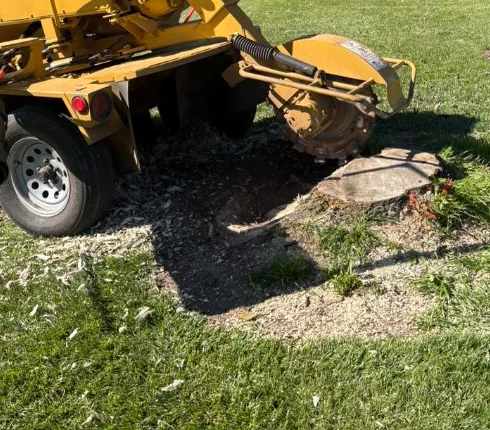
A stump grinder has a spinning cutting wheel. The wheel is swept back and forth across the stump, shaving it into chips a little at a time, until the wood is below the level of the lawn. What was a stump becomes a pile of chips mixed with soil.
The stump is gone. The roots are not. Grinding takes out the stump and the flare right around it. The roots that spread out underground stay put and rot away slowly. For a lawn or a flower bed, that's fine.
If you need every root out, say for a foundation, a driveway or footings, that's a different job. Read about getting the whole stump and root ball out to see which one fits.
JULIE 811: Utilities Get Marked Before Any Stump Grinding
A grinder cuts below ground, and that's where gas, electric, cable and water run. So before any stump is ground, underground utilities need to be marked. Here in Illinois, you get that done with a free call to JULIE at 811.
The utilities send somebody out to mark their lines with paint or small flags. That takes a few days, so the request goes in ahead of the job, not the morning of. Leave the marks alone until the grinding is done.
This next bit gets missed a lot. JULIE marks lines the utilities own. It doesn't mark lines you or a past owner put in. Those are yours to point out:
- Sprinkler lines and heads
- A buried dog fence wire
- Low-voltage landscape lighting
- A gas line to a grill, fire pit or pool heater
- Power run out to a shed or detached garage
- Drain tile and sump discharge pipes
How We Grind a Stump, Step by Step
The grinding itself is the short part. The setup is what keeps it clean.
- Check the marks. Utility paint and flags get looked at first, along with anything you've told us is buried.
- Clear around the stump. Rocks, bricks, edging and mulch are pulled back. A stone hitting the wheel is bad for everybody.
- Cut it low. A stump left standing tall is cut down close to the ground with a chainsaw first. Less wood to grind.
- Mind what's nearby. Chips fly, so the work is set up to throw them away from windows, siding and cars.
- Grind in passes. The wheel sweeps side to side, drops a little, and sweeps again until the stump is below the lawn.
- Chase the big roots. Surface roots humping up through the grass near the stump can be ground down too, if that's in the price.
- Check for leftovers. The hole is probed to make sure no solid wood is sitting near the surface.
- Rake up. Chips are raked back into the hole or loaded and hauled, whichever you asked for.
Reasons to Grind a Stump and Not Just Live With It
A stump takes a long time to rot away by itself, and hardwoods like oak take the longest. While it sits there, it's a thing to mow around and trip over. Some trees, cottonwood and willow among them, keep sending up shoots from the stump. A rotting stump also draws ants and other insects that like soft wood, which isn't what you want a few steps from the house.
If the tree is still standing, the easy move is to have the stump priced with the takedown. See having the tree taken down for how that goes.
You don't need to have had us cut the tree, either. A stump somebody else left, or one that came with the house, is a fine job by itself. Stump grinding in Waukegan is the same drive for us as a removal there.
Stump Grinding vs. Leaving It vs. Digging It Out
You've got more than one way to deal with a stump. Grinding is the middle road, and it's the right one for most yards.
| Option | What happens | Good for | Downside |
|---|---|---|---|
| Leave the stump | It sits and rots slowly | A back corner nobody uses | In the way for a long time, may sprout, draws insects |
| Grind it | Stump is chipped down below the lawn, roots stay | Lawns, beds and most yards | Leaves chips and a soft spot that settles |
| Dig it out | Stump and main roots come out of the ground | Spots where something will be built | Big hole and more disruption to the yard |
| Stump killer products | Meant to speed up rot | People in no hurry at all | Slow, and you still have a stump in the meantime |
What Makes a Stump Hard to Grind
Stumps look alike from the kitchen window. Up close they aren't.
- Width at the ground. The wider the stump, the more passes it takes. Measure across the widest part at soil level, flare included, not across the cut top.
- The wood. Fresh oak, maple or honeylocust is tough. An old, soft stump grinds fast.
- Surface roots. A stump with thick roots running out across the lawn is a bigger job than the stump alone.
- Access. The grinder has to reach the stump. A narrow gate, steps, a steep slope or a retaining wall can make that slow. Tell us how wide your gate opening is.
- What's close. Right against a fence or foundation, the wheel can't swing all the way around, so a sliver may be left on that side.
- Junk in the wood. Stumps that grew around landscape rock, old fence wire or a chunk of concrete are rough on the cutting teeth.
- A utility mark running through it. Sometimes the answer is to grind shallow or leave part of the stump.
What Stump Grinding Cost Depends On in Lake County IL
No posted prices here. You get a free quote and one flat price before the grinder is unloaded. It's built from a short list: how wide the stump is at the ground, how many stumps there are, the kind of wood and its age, whether surface roots get ground too, access for the machine, what's close by, and whether the chips stay or go.
Text a photo of each stump with something in the frame for scale, like a shovel or a boot, plus a shot of the path from the street to the stump. Most stumps can be priced that way. How our quotes work is spelled out on its own page.
Stumps are quoted from photos in every town we cover. For a stump ground out in Round Lake Beach, the photo and the gate width are usually all we need.
Getting the Yard Ready for the Stump Grinder
Ground conditions matter. Low yards and lots near water stay soft, and a machine can rut a lawn that hasn't dried out. If you're after stump grinding in Lake Zurich or another lake town, a dry stretch is the time to do it. Beyond that, the list is short:
- Make sure the JULIE request is in and the marks are down.
- Flag sprinkler heads and anything private that's buried.
- Pull rocks, pavers, edging and yard decorations away from the stump.
- Move cars, and close windows on the side of the house facing the stump.
- Unlock the gate and clear a path to the stump.
- Keep kids and pets inside. Chips and small stones get thrown.
- Decide what you want done with the chips.
After the Grind: Chips, Settling and Growing Grass
A ground stump turns into a surprising pile of chips. Loose chips take up more room than the solid stump did, so the mound is bigger than you'd guess. You've got two choices. Leave them raked into the hole, or have them hauled.
Chips left in the hole settle as they break down, so expect a dip in that spot later. They also aren't much of a seedbed. For a quick lawn, have the chips taken out, fill the hole with topsoil and seed it. We do the grinding and the hauling. The soil and seed are yours, since we don't do lawn care or landscaping.
The chips make decent mulch around shrubs and beds if you want to keep some. Illinois keeps yard waste out of landfills, so whatever we haul gets recycled.
Planning a new tree? Don't set it in the exact same hole. That spot is packed with chips and dead roots. Shift the new one a few steps to the side. We don't plant trees, but that tip costs nothing.
Stump Grinding Mistakes and a Note on Permits
On permits: if the tree is still standing, remember that many Lake County villages have tree rules. Your village may require a permit before a tree comes down, so check with village hall first. A stump in the strip between the sidewalk and the street usually belongs to the village. Ask them before anybody touches it.
Now the mistakes:
- Skipping the 811 call because "it's just a stump."
- Forgetting the private lines JULIE doesn't mark.
- Measuring across the cut top, not at the ground.
- Renting a small grinder for a big hardwood stump. It's slow, hard work and easy to get hurt on.
- Settling for a shallow grind, then hitting wood when you go to plant grass or set a paver.
- Planting a new tree right in the chips.
- Not asking whether chip cleanup is in the price.